
Stable Substrates and Finished Surfaces
Plywood and Veneer in Hood River for cabinetmakers, builders, and woodworkers constructing panels, casework, and furniture that require dimensional stability and quality face layers
Cabinet construction, paneling, and furniture projects often require sheet goods that remain flat under finish while providing hardwood face layers that match solid lumber components. Hood River Hardwoods supplies plywood and veneer options throughout the Columbia River Gorge for craftsmen building kitchen cabinetry, installers working on wall paneling systems, and furniture makers constructing case pieces where large, stable surfaces are essential. The right sheet material reduces labor by arriving flat and staying that way, while veneer face layers provide grain continuity with your solid wood elements.
Plywood selection involves matching core construction to the application's structural and environmental demands, then choosing face veneer species and grade to suit finishing requirements. Veneer-core plywood offers superior screw holding and edge machining compared to MDF or particleboard cores, making it preferable for cabinet boxes and furniture frames. Face veneer quality determines how much sanding and preparation your finishing process requires, with higher grades providing consistent grain and minimal defects that show through stain or clear coats.
Come by to review available plywood grades and discuss veneer options that match your solid lumber selections.
Choose your species and lay it on our veneer table
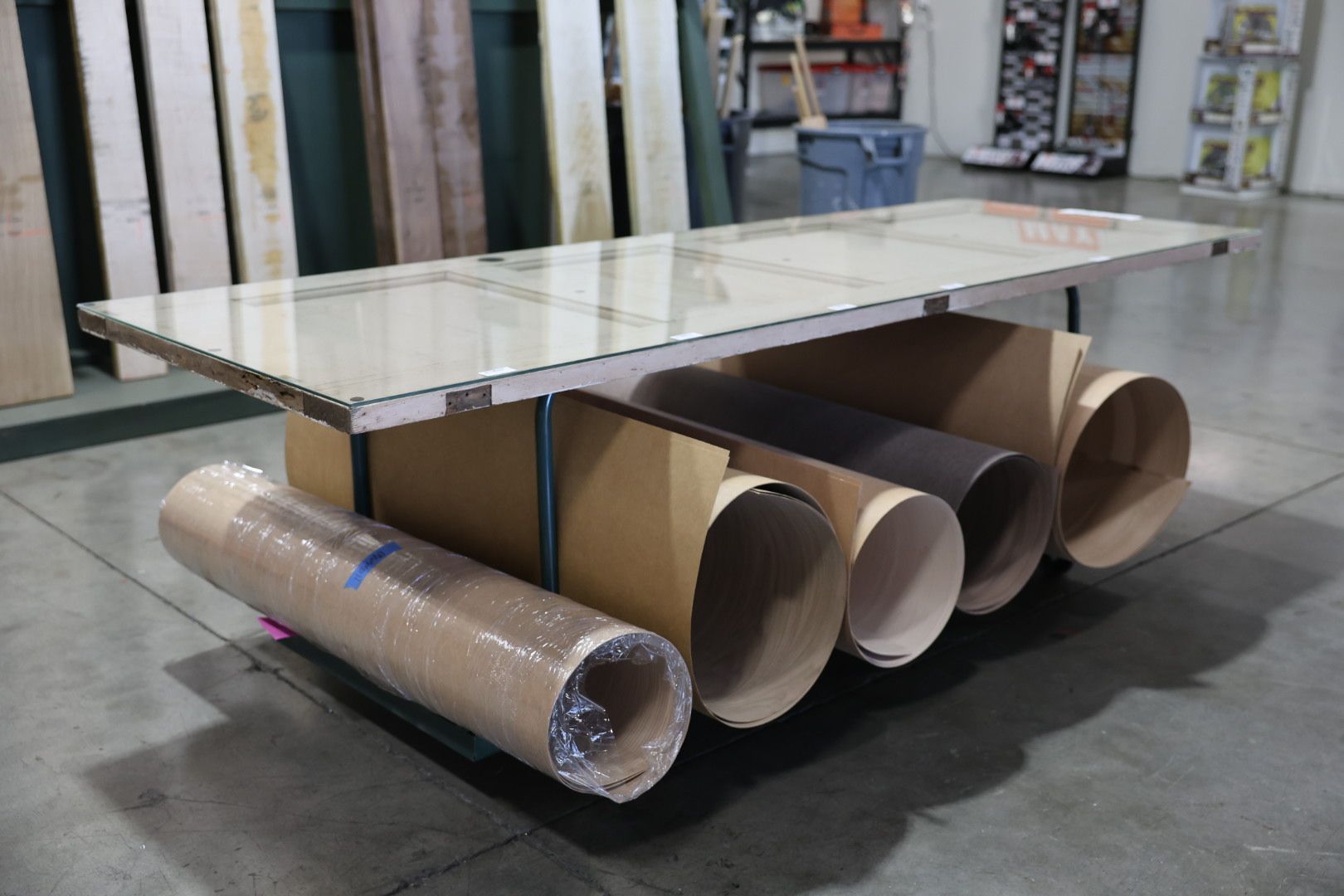
Available species include:
Maple
Hickory
Walnut
White Oak
Rift White Oak
What You Notice Once Casework Is Finished
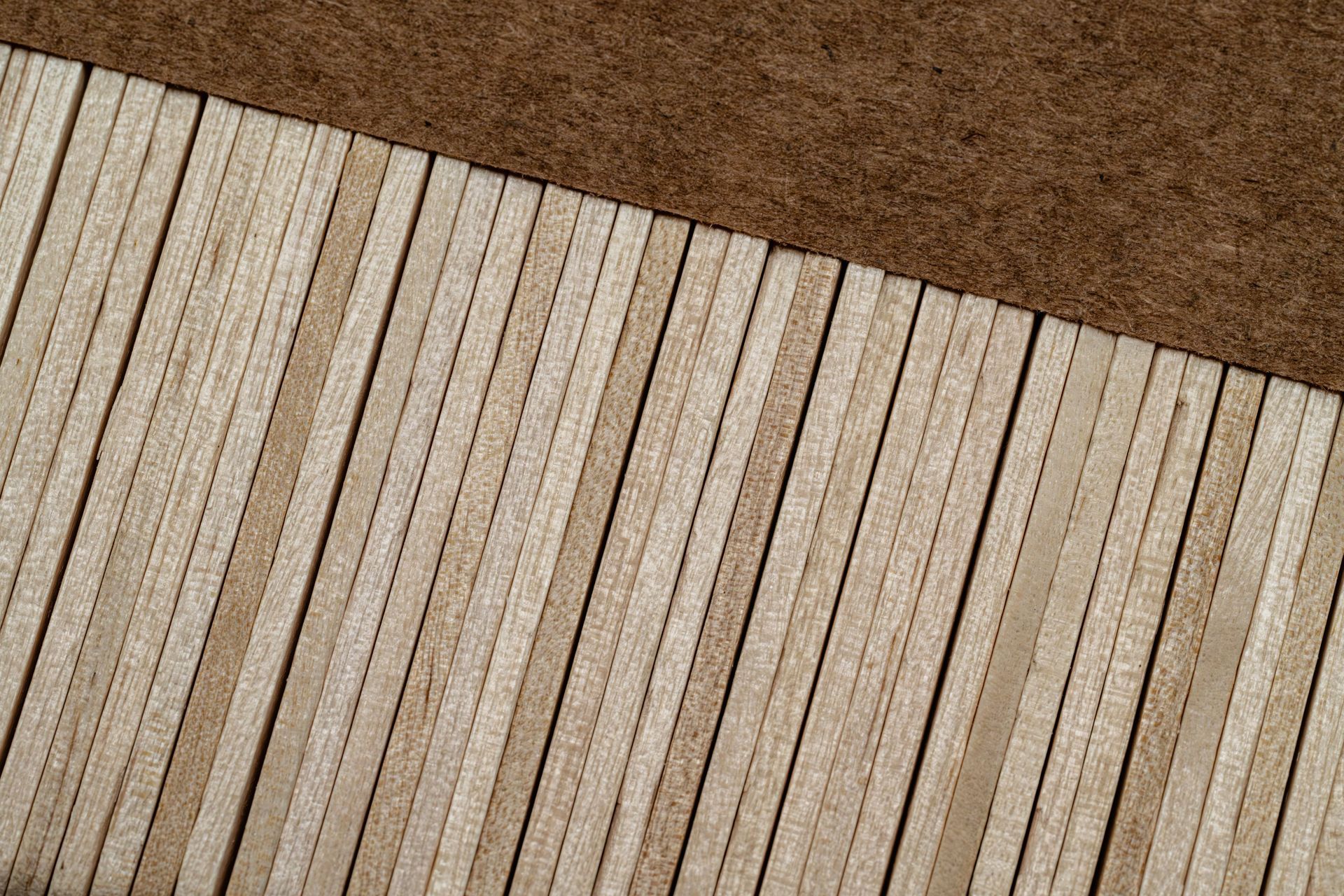
Choosing appropriate plywood means evaluating core stability, face veneer species, and grade relative to how the finished surface will be seen and used. Multi-ply hardwood cores resist warping better than softwood or composite alternatives, particularly in applications like cabinet sides and shelving that span unsupported distances. Face veneer thickness and the number of plies in the core affect how the panel responds to humidity changes common in Hood River's climate, with better constructions maintaining flat surfaces and tight edge banding over time.
Once your cabinets or panels are installed, properly selected plywood maintains flat surfaces without bowing between supports, accepts edge banding without core telegraphing through, and presents face veneer that matches the color and grain direction of adjacent solid wood components after finishing. Doors remain flat in their frames, shelves support loads without sagging, and panels stay flush within their perimeter trim.
Hood River Hardwoods provides guidance on matching plywood specifications to your project's structural and aesthetic requirements, helping you determine which core constructions suit your joinery methods and which face veneer grades meet your finishing standards. The selection includes both domestically produced hardwood plywood and specialty options for projects requiring specific veneer species or thickness, backed by consultation on how to integrate sheet goods with solid lumber components seamlessly.
Common Questions About This Material
Cabinetmakers and woodworkers in the Gorge often need clarity on plywood specifications and veneer selection before committing to materials for built-in or furniture projects.
What differentiates plywood core types?
Veneer-core plywood layers hardwood plies throughout the thickness, providing better fastener holding and edge quality than MDF or particleboard cores, which offer smoother surfaces but less structural integrity for joinery.
How does face veneer grade affect finishing?
Higher veneer grades contain fewer defects and more consistent grain, requiring less surface preparation before staining and resulting in more uniform color absorption across large panels.
Why does plywood thickness matter beyond strength?
Thicker panels reduce the telegraphing of core layers through face veneer and provide more material for machining joinery like dados and rabbets without compromising the structural core.
How should plywood acclimate before use in Hood River?
Store sheet goods in the installation environment for several days before cutting, allowing the panels to reach moisture equilibrium and reducing the risk of movement after assembly in the Gorge's variable humidity conditions.
What veneer species match common hardwood lumber?
Hood River Hardwoods carries plywood faced with oak, maple, cherry, walnut, and specialty species, allowing you to coordinate panel surfaces with solid lumber trim and frames for visual consistency across your project.
Hood River Hardwoods serves the woodworking community with both materials and practical guidance for integrating sheet goods into quality projects. Visit the location to examine plywood samples and discuss your casework or paneling needs with staff familiar with material performance.